Figuring out the right k rail weight can seem a bit tricky when you’re just starting out. Lots of people wonder about how much these barriers really weigh and why it matters. Don’t worry, it’s not as complicated as it looks.
We’ll go through it step by step so it all makes perfect sense. Get ready to learn about k rail weight and how to handle it.
Key Takeaways
- You will learn the typical weight range for K-rails.
- You will discover factors that influence K-rail weight.
- You will understand why knowing K-rail weight is important for projects.
- You will see how different K-rail materials affect weight.
- You will get practical tips for handling and moving K-rails based on weight.
What Is K Rail Weight
K-rail, also known as Jersey barrier, is a common type of traffic control and safety barrier. These barriers are often made of concrete or plastic and are used on roads and construction sites. Knowing the k rail weight is super important for planning how to move and set them up.
They need to be heavy enough to stay in place but also manageable to install.
The weight of a K-rail can change a lot based on what it’s made of and how big it is. For example, a concrete K-rail is much heavier than one made of plastic. This difference in weight affects how you transport them, how many you can carry at once, and the equipment you need to lift them.
Safety is a big reason why knowing the weight is key. If a barrier is too light, it might not do its job to protect people.
Concrete K Rail Weights
Concrete K-rails are the most common type you’ll see. They are very strong and durable. Because they are made of concrete, they are also very heavy.
This heaviness is what makes them effective at blocking traffic and preventing vehicles from straying into dangerous areas. The exact weight of a concrete K-rail depends on its size and thickness.
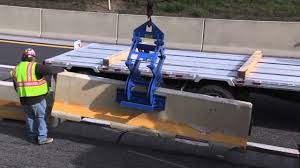
A standard 10-foot-long concrete K-rail typically weighs between 4,000 and 5,000 pounds. Some larger or thicker sections can weigh even more, sometimes up to 7,000 pounds. This is a lot of weight, which is why you usually need heavy machinery like cranes or forklifts to move them.
Trying to move a concrete K-rail by hand is impossible and very dangerous.
These heavy barriers are great for long-term projects or areas where there’s a high risk of vehicles hitting them. Their weight also means they are stable and don’t move around easily, even in windy conditions or during minor impacts. This stability is crucial for road safety and construction site security.
Plastic K Rail Weights
Plastic K-rails offer a lighter alternative to concrete barriers. They are often made from durable polyethylene. While not as heavy as concrete, they are still effective for many safety purposes.
Their lighter weight makes them easier to transport, set up, and take down. This can save time and money on projects.
Empty plastic K-rails can weigh as little as 50 to 100 pounds. However, they are usually filled with water or sand to make them heavier and more stable. When filled with water, a typical 10-foot plastic K-rail might weigh around 800 to 1,000 pounds.
If filled with sand, they can weigh even more, potentially reaching 1,500 pounds or higher, depending on the fill density and rail size.
The advantage of plastic K-rails is their portability and the ability to customize their weight by filling them. This makes them a flexible option for temporary traffic control or events. They are also less likely to cause damage if they do happen to shift or hit a vehicle.
Factors Affecting K Rail Weight
Several things can change how much a K-rail weighs. The most obvious is the material. Concrete is dense, so concrete K-rails are heavy.
Plastic is much less dense. Even within the same material, there are differences.
Size and dimensions play a big role. A longer, taller, or thicker K-rail will naturally weigh more than a shorter, shorter, or thinner one. The thickness of the walls also contributes to the weight.
For plastic rails, how they are filled is a major factor. Water is heavier than air, and sand is heavier than water. So, a plastic rail filled with sand will be heavier than one filled with water.
Sometimes, K-rails have internal reinforcement, like steel bars in concrete. This can add a little extra weight. The manufacturing process itself can also lead to slight variations in density and therefore weight, but these are usually minor compared to the main material and size differences.
Why Knowing K Rail Weight Matters
Understanding k rail weight is not just about numbers; it’s crucial for practical reasons on any job site. It directly impacts safety, logistics, and costs. When you know the weight, you can plan everything from how to get the rails to the site to how to place them safely and effectively.
Safety is the primary concern. If a barrier is too light and not properly secured, it can be moved by wind or a minor vehicle bump, which defeats its purpose. Knowing the weight helps determine if additional anchoring or filling (for plastic rails) is needed.
It also tells you what kind of lifting equipment is required. Trying to lift a heavy barrier without the right tools can lead to serious injuries or damage.
Logistics is another big area. The weight determines the type of trucks and trailers you need for transport. Heavier barriers mean fewer can be hauled at once, increasing transport costs and time.
For installation, knowing the weight helps decide if a crane, forklift, or just a few people can handle the job. This planning prevents delays and keeps the project on schedule.
Safety and Stability
The weight of a K-rail is directly related to its stability. A heavier barrier is less likely to be moved by external forces. This is vital for traffic control, where barriers are meant to create a secure separation between vehicles and hazardous areas like construction zones or active work lanes.
For concrete K-rails, their inherent heavy weight provides excellent stability. They are designed to resist impacts from vehicles. A well-placed concrete barrier can redirect a car safely, protecting workers and pedestrians.
This ability to withstand and redirect force is a key safety feature.
Plastic K-rails, while lighter when empty, achieve stability through filling. Water or sand adds significant mass, making them heavy enough to resist movement. The proper filling of plastic barriers is essential to ensure they meet safety standards.
Inadequate filling can render them ineffective and potentially dangerous.
Transportation and Logistics
Moving K-rails from one location to another requires careful planning based on their weight. Concrete K-rails, weighing thousands of pounds, typically need heavy-duty trucks and specialized lifting equipment for loading and unloading. This can involve significant costs and logistical coordination.
Plastic K-rails, especially when empty or partially filled, are much easier to transport. They can be stacked and carried on standard flatbed trucks, often in larger quantities. This reduces transportation time and expenses.
Even when filled with water, they are considerably lighter than concrete, making logistics simpler.
Project managers must consider the weight of the K-rails when planning their budget and timeline. The number of trips required, the type of vehicles needed, and the manpower for loading and unloading all depend on the weight. Efficient logistics planning ensures that barriers are on-site when and where they are needed without unnecessary delays or expenses.
Installation and Handling
The ease of installation and handling is another significant benefit related to K-rail weight. For concrete barriers, professional crews with heavy equipment are usually required to lift and place them. This ensures they are positioned accurately and safely.
Plastic K-rails offer much more flexibility. They can often be moved and placed by a few workers, especially when empty or filled with water. This makes them ideal for situations where frequent repositioning is necessary or where heavy equipment access is limited.
The ability to quickly deploy and remove these barriers can speed up project timelines.
When selecting K-rails, it’s important to assess the site conditions and available resources. If a site has limited access for large machinery, lighter plastic rails might be a better choice. If maximum security and impact resistance are needed, the weight of concrete rails becomes a primary advantage, even with the increased handling challenges.
Types of K Rails And Their Weights
K-rails come in different forms, each with its own weight characteristics. The most common are concrete and plastic, but there are variations within these categories.
Standard Concrete Jersey Barriers
These are the workhorses of traffic control. They are typically molded from reinforced concrete. A common size is 10 feet long, about 32 inches high, and 24 inches wide at the base, tapering towards the top.
This standard size results in a substantial weight.
A typical 10-foot concrete Jersey barrier weighs around 4,000 to 5,000 pounds. This immense weight gives them incredible stability and resistance to impact. They are designed to withstand significant forces from vehicles, redirecting them safely away from construction crews or accident scenes.
Their density and mass are their primary strengths.
Because of their weight, placing these barriers requires specialized equipment such as cranes, heavy-duty forklifts, or front-end loaders. This makes them ideal for long-term projects or locations where permanent or semi-permanent traffic separation is needed. They are rarely moved by hand.
Water-Filled Plastic Barriers
Plastic barriers offer a lighter and more flexible alternative. They are usually made from UV-resistant polyethylene. The primary advantage is their ability to be filled with water, sand, or other materials to increase their weight and stability.
When empty, a 10-foot plastic barrier might only weigh about 70-100 pounds. However, once filled with water, the same barrier can weigh around 800-1,000 pounds. This is significantly less than concrete but still provides adequate protection for many applications.
The water acts as ballast, keeping the barrier in place.
These barriers are often connected together to form a continuous line. They are commonly used for temporary traffic control, event perimeters, and in areas where weight restrictions are a concern. Their lighter empty weight makes them easy to transport and deploy quickly.
Sand-Filled Plastic Barriers
Filling plastic K-rails with sand provides even more weight and stability than water. Sand is denser than water, so a sand-filled barrier will be heavier. This makes them a good compromise between the portability of empty plastic barriers and the heavy-duty nature of concrete barriers.
A 10-foot plastic barrier filled with sand can weigh from 1,500 to 2,000 pounds or more, depending on the sand’s density and how tightly it’s packed. This increased weight makes them more resistant to displacement and impact compared to water-filled versions.
Sand-filled barriers are a good choice for construction sites where more robust traffic control is needed but the use of heavy concrete barriers is not practical or cost-effective. They offer enhanced security and durability, making them suitable for a wider range of applications than water-filled options.
Other K Rail Variations
Beyond the standard concrete and plastic types, you might encounter other variations of K-rails designed for specific purposes. Some might be made from recycled materials, which can affect their density and weight. Others might have special interlocking mechanisms for faster setup.
There are also smaller, more portable versions of K-rails used for pedestrian walkways or temporary event barriers. These are often made of lighter plastic and may not be designed to withstand vehicle impacts. Their weight is minimal, often under 50 pounds.
In some cases, you might see hybrid barriers that combine elements of different materials. For example, a plastic barrier might have a concrete base or be reinforced with steel. These variations are all aimed at optimizing performance, cost, and ease of use for different scenarios, with weight being a key consideration in their design.
Calculating K Rail Weight for Projects
When you’re planning a project that involves K-rails, figuring out the total weight is an essential step. This isn’t just about knowing the weight of a single barrier; it’s about calculating the weight of all the barriers you’ll need and understanding how that total weight affects your project’s planning.
The first step is to identify the exact type and size of K-rails you will be using. Are you opting for concrete, water-filled plastic, or sand-filled plastic barriers? Knowing this will give you a starting point for estimating the weight per barrier.
You’ll also need to know the length of each barrier.
Once you have the weight of a single barrier, you multiply that by the total number of barriers required for your project. This will give you the estimated total weight of all the K-rails. This total figure is what you’ll use to determine transport needs, lifting equipment, and site preparation requirements.
Estimating Total Barrier Weight
To estimate the total weight of K-rails for a project, you need a few key pieces of information. First, you must know the exact length of the K-rail sections you plan to use. Standard lengths are often 10 or 20 feet, but custom sizes can exist.
Next, determine the average weight per linear foot for the type of K-rail chosen. For instance, a concrete K-rail might weigh about 400-500 pounds per linear foot. A water-filled plastic K-rail might weigh around 80-100 pounds per linear foot.
A sand-filled plastic K-rail could be about 150-200 pounds per linear foot.
Finally, multiply the weight per linear foot by the total length of K-rail needed for your project. If you need 500 feet of standard concrete K-rail, the total weight would be between 200,000 and 250,000 pounds. This number is vital for planning the logistics of transporting and installing the barriers.
Impact on Equipment Needs
The total k rail weight directly dictates the type and capacity of equipment you’ll need. For very heavy concrete barriers, you’ll likely require a crane with a high lifting capacity or a heavy-duty forklift. The weight will determine the size of the truck needed for transport, potentially requiring specialized haulers.
For lighter plastic barriers, even when filled, smaller forklifts or even manual labor with specialized dollies might suffice for placement. Water-filled barriers are easier to move in sections than sand-filled ones due to the difference in weight. Planning the right equipment prevents delays, ensures safety, and avoids costly equipment rentals that are either too small or unnecessarily large for the job.
Consider the ground conditions too. Heavy barriers placed on soft ground might require additional ground preparation or stabilization. The equipment needed to place heavy barriers also needs to be able to access the site without causing damage.
This is why weight estimations are critical for the entire project plan.
Budgetary Considerations
The weight of K-rails has a significant impact on project budgets. Heavier barriers, like concrete ones, often have a higher upfront material cost per unit. More importantly, their weight drives up transportation costs, as fewer units can be carried per truckload, requiring more trips.
Furthermore, the need for heavy lifting equipment translates to rental fees and operational costs. The labor required to handle and install heavier barriers might also be more specialized and expensive. In contrast, lighter plastic barriers can lower these costs significantly due to easier transport and installation.
When budgeting, consider the long-term costs as well. While concrete barriers might have a higher initial cost, their durability could mean less frequent replacement. Plastic barriers, while cheaper to move and install, might require more maintenance or replacement over time depending on the application.
A thorough cost analysis considering weight and material is key.
Common Myths Debunked
Myth 1: All K-Rails Weigh The Same
This is a common misconception. As we’ve discussed, K-rails come in various materials like concrete and plastic, and sizes. Plastic K-rails can also be filled with water or sand, drastically changing their weight.
Therefore, their weights can vary by thousands of pounds.
Myth 2: Lighter K-Rails Are Always Better
While lighter K-rails are easier to move and install, this isn’t always the best option. Heavier concrete K-rails offer superior stability and impact resistance, making them essential for high-risk areas. The “better” choice depends entirely on the project’s specific safety and security needs.
Myth 3: You Don’t Need Special Equipment For Concrete K-Rails
This is a dangerous myth. Standard concrete K-rails can weigh thousands of pounds. Attempting to move them without proper lifting equipment like cranes or forklifts can lead to severe injuries and damage.
Always use appropriate machinery for heavy barriers.
Myth 4: Empty Plastic K-Rails Are Heavy Enough For Traffic Control
Empty plastic K-rails are very light and offer minimal stability. They are typically only suitable for very low-impact situations or pedestrian guidance. For actual traffic control, they must be filled with water or sand to provide sufficient weight and resistance.
Frequently Asked Questions
Question: How much does a typical 10-foot concrete K-rail weigh
Answer: A typical 10-foot concrete K-rail weighs between 4,000 and 5,000 pounds.
Question: Can plastic K-rails be used without filling them
Answer: Empty plastic K-rails are very light and generally not suitable for traffic control as they lack stability and impact resistance.
Question: What is the advantage of water-filled plastic K-rails
Answer: Water-filled plastic K-rails are lighter than concrete, easier to transport and set up, and provide adequate stability for many temporary traffic control situations.
Question: Does the material of the K-rail significantly affect its weight
Answer: Yes, the material is a primary factor; concrete is very dense and heavy, while plastic is much lighter. Filling plastic barriers also greatly increases their weight.
Question: What is the heaviest type of K-rail
Answer: Heavy-duty concrete K-rails are generally the heaviest type, with some sections weighing over 7,000 pounds.
Final Thoughts
Understanding k rail weight is essential for safe and efficient project planning. From concrete barriers weighing thousands of pounds to lighter plastic options that can be filled, each type has specific handling and application needs. Always consider the weight for equipment, logistics, and site safety to ensure your project runs smoothly and securely.